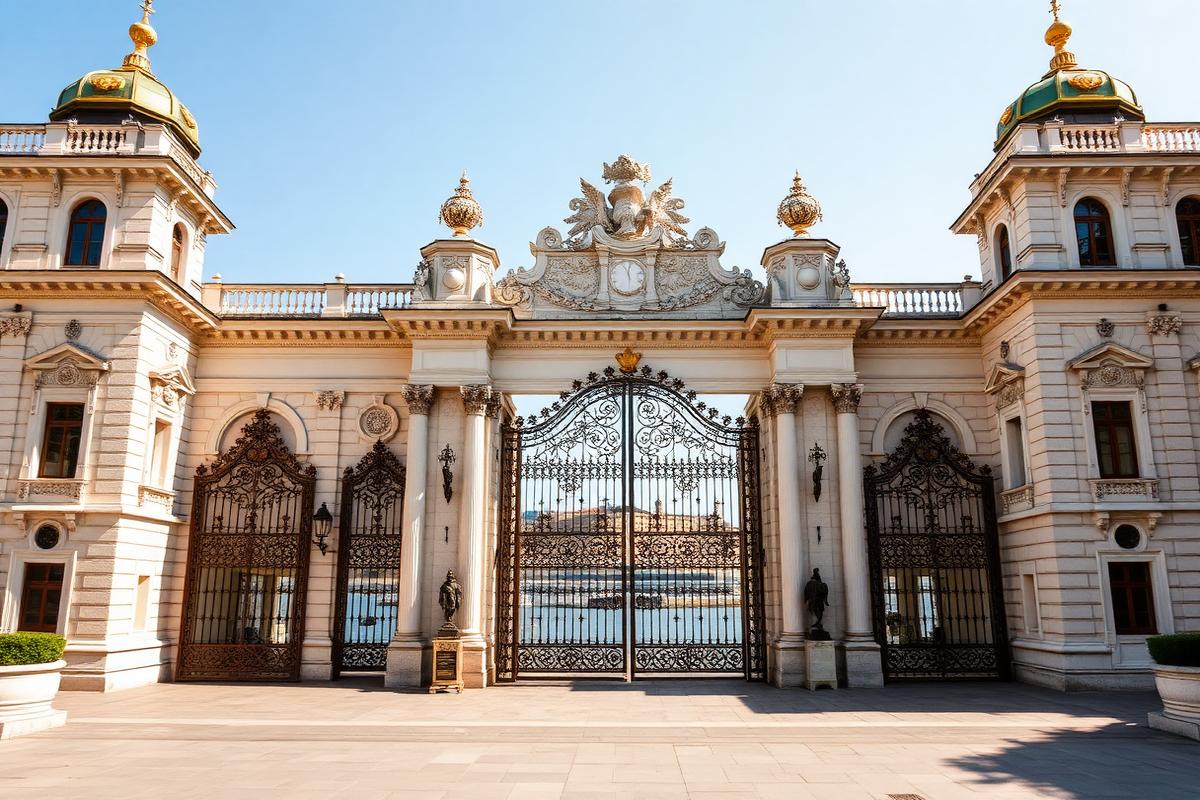

Dolmabahçe Palace & Istiklal Street
The last imperial palace, Istiklal Street and the Galata Tower.
Programme
Drive to the royal residence of the Ottoman sultans, the sumptuous Dolmabahçe Palace. During the 19th century, the westernisation of the Ottoman Empire was also felt in the architecture of the time; Dolmabahçe Palace was built under such an influence between 1843 and 1856 by Sultan Abdülmecit. The site was obtained by filling a small bay on the Bosphorus, giving the palace its name, which means filled garden. Its interior decoration is famed for a great collection of European antiques, its furniture and a Turkish bath in alabaster. Covering an area of 25 hectares, the palace consists of 285 rooms and 46 halls, among them a large reception hall supported by 56 columns and featuring a chandelier weighing 4.5 tons. Approximately 600 paintings adorn the walls, and specially woven Hereke carpets of huge dimensions cover the palace floors.
Continue to Istiklal Street in the Beyoğlu & Taksim area — one of the most famous pedestrian avenues in Istanbul, roughly three kilometres long, lined with exquisite boutiques, music stores, bookstores, art galleries, cinemas, theatres, libraries, cafés, pubs, night clubs with live music, historical patisseries, chocolatiers and restaurants. The avenue is surrounded by historically and politically significant buildings such as the Çiçek Pasajı (Flower Passage), the Balık Pazarı (Fish Market), the Church of St. Antoine (1913), the Aya Triada Church and the Church of St. Mary Draperis (1678), as well as 19th century European academic institutions and several consulates.
Continue to the Galata Tower, built by the Genoese colony as part of their town defence fortifications in the 14th century and named Christea Turris (Tower of Christ) in Genoese sources. It was altered considerably under the Ottomans and used at different times as a prison and a fire watchtower. Restored in 1967 with the addition of an elevator, it now stands 63 m high and offers panoramic views of the region. In the 17th century, during the reign of Sultan Murat IV, Hezarfen Ahmet Çelebi — a scholar whose name means "a thousand sciences" — is said to have flown with rush-work wings from the top of the Galata Tower across the Bosphorus to Üsküdar.
Photo Gallery
Notes
Customized program, operated privately.
- Guests will be picked up and dropped off from/to their hotels.
- Itinerary, pace and inclusions tailored to your group.